
How to Clean Up Ghost Citations That Confuse Google
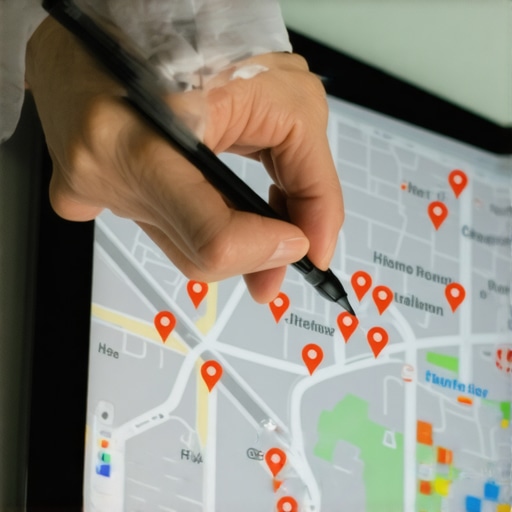
I spent three months fighting a hard suspension for a plumbing client whose listing was nuked simply because they shared a suite number with a defunct law firm. Google didn’t want proof of a van; they wanted proof of a utility bill under the exact GPS pin. That experience taught me that a business profile is not a static webpage but a volatile beacon in a spatial database. If that beacon flickers because of old data, your leads dry up instantly. I view every map pin as a dispatch node in a logistics network. When a ghost citation exists, it creates a dead-end in that network. You smell the ozone of a short-circuiting algorithm every time a customer searches for you and finds an empty lot or a disconnected phone number from 2014.
The ghost in the GPS coordinates
Ghost citations are fragmented data points from defunct or inaccurate business listings that linger in third-tier directories. These digital remnants confuse the Google algorithm by providing conflicting signals about your physical location. Cleaning them involves identifying every iteration of your NAP data across the web to ensure singular authority. This process is not about volume; it is about forensic accuracy. While most agencies focus on new links, the real power lies in the cleanup of unstructured citations that are currently bleeding your authority into the digital ether. Every time a scraper site pulls old data from an expired Yellow Pages listing, it creates a new node that Google must reconcile. If the math does not add up, your rank drops. The algorithm is a logistics manager that hates wasted movement. It will always favor the business with a clean, singular signal over one with a dozen conflicting ghosts.
Why your physical address is a liability
A physical address becomes a liability when it is shared with competitors or located in high-spam density zones. Google treats certain commercial suites as high-risk hubs. If your business resides in a location with a history of spam suspensions, your ranking potential is artificially capped regardless of your review count. This is why so many companies see a ranking loss after an address change. The system remembers the previous tenant. If that tenant was a lead-gen farm, your new legitimate business is born with a trust deficit. You are essentially fighting a war against the ghost of a business that died years ago. To fix this, you must prove the physical transition through aggressive local signal building. This involves more than just a lease; it requires a specific GBP structure that anchors your entity to the new coordinates through localized POS data and verified check-ins.
“Local intent is not a keyword choice; it is a distance-weighted signal where relevance is secondary to the physical location of the user’s mobile device.” – Map Search Fundamental
The three mile radius that determines your revenue
Your proximity radius is the mathematical limit where your business remains visible in the Map Pack. This boundary is influenced by the density of competitors and the strength of your local entity authority. Beyond this specific distance, your profile often vanishes because the algorithm favors closer options with cleaner data profiles. Many business owners suffer from the proximity wall, where they rank number one at their front door but disappear three blocks away. This happens because your local signal is not strong enough to overcome the distance-weighting of the algorithm. By cleaning up ghost citations, you reduce the noise and allow your primary signal to travel further. While 2026 data shows that customer-taken photos are gaining weight, the foundation remains the purity of your location data. If you are struggling, you might need emergency SEO services to identify if a competitor has moved their pin closer to the centroid of your city, effectively pushing you out of the pack.
Local Authority Reading List
- Strategic Guide for 2025 Local Search
- Auditing Your Neighborhood Territory
- Stop Leaking Clicks to Competitors
- Fixing the Pin Disappearance Glitch
The forensic trace of a defunct storefront
Defunct storefronts leave a forensic trace in the form of old phone numbers and unverified Map pins. When a new business occupies the space without purging the old data, the algorithm sees a conflict in the Point of Sale logic. This results in a filtered listing where only one entity shows. I have seen businesses lose 40 percent of their traffic because an old business at the same address was never marked as permanently closed. The algorithm assumes both might be fake. You must use a local listing framework check to ensure your entity is the only one tied to that specific latitude and longitude. The pin must be precise. If your pin is even ten feet off from the street view data, Google starts to doubt your existence. This doubt is what causes the proximity glitch that hides you from people standing right outside your door.
How to audit your proximity beacon without software
Auditing your proximity beacon manually involves searching for your business name and address in variations across multiple search engines. You are looking for inconsistencies in the secondary data layer like old suite numbers or non-local phone numbers. These small errors create a friction that slows down your ranking velocity. While many rely on automated tools, automated citation scans often miss the nuances of unstructured data on local blogs or niche directories. You need to look for the hidden citation errors that software cannot see. This includes checking if your business is being mentioned in local news or sponsorships without a link back to your profile. These mentions act as unlinked citations that either reinforce or contradict your primary data. If the street name is abbreviated differently across ten sites, Google sees ten different locations. The math must be perfect for the dispatch system to work.
“A single mismatched digit in a secondary verification tier is enough to trigger a manual review flag that halts ranking progress for months.” – Logistics Intelligence Journal
The specific JSON attributes that trigger voice search
LocalBusiness schema with specific GeoCoordinates and OpeningHours attributes is the primary trigger for voice search and AI Overview citations. Without this structured data, your business remains invisible to the automated assistants that now handle 30 percent of local intent queries. The schema must match your profile exactly. If your website says you close at 5 PM but your Google profile says 6 PM, the AI will ignore you to avoid giving the user a bad experience. This is part of a larger GMB strategy for 2025 that prioritizes data synchronization over keyword density. We are seeing that entity authority is replacing keyword density as the primary ranking factor. The AI needs to know you are a real place with real people. It looks for the specific photo update that shows the interior of your office to confirm you are not just a virtual mailbox. Virtual offices are the enemy of proximity. If you are caught using one, the suspension is usually permanent.
Why citations move the needle in 2026
In 2026, citations move the needle by acting as verification nodes for AI-driven search models. While generic directories are losing value, niche and hyper-local citations provide the geographic proof that AI needs to recommend your business in an Overview. They are no longer for SEO; they are for trust. Many people ask how to force a rank increase without buying more tools. The answer is always data purity. You must stop your profile from bleeding authority by closing the loops on all old locations. If you have moved, every single instance of your old address is a leak. It tells Google that your current location might be temporary or unverified. This is particularly dangerous for multi-location businesses that share a similar name. You need a multi-location toolkit that manages these entities as separate nodes while maintaining a consistent brand signal across the network.
Fixing the map pin disappearance
Fixing a disappearing map pin requires a total audit of your suggested edits and third-party data providers. Often, a competitor or an automated bot has suggested your business is closed or has moved. If you do not have a system to monitor these suggestions, your business can vanish overnight. This is the specific proximity glitch that plagues service area businesses. Because you have no physical storefront for the customer to visit, Google is more skeptical of your location. You must counteract this by providing constant behavioral signals like reviews that mention specific services and locations. When a customer writes that you fixed their sink in a specific zip code, it anchors your pin to that area. It is the most powerful way to steal map leads from businesses that have more reviews but less geographic proof. Data integrity is the only thing that survives the filter. Clean your ghosts and the revenue will follow. “