
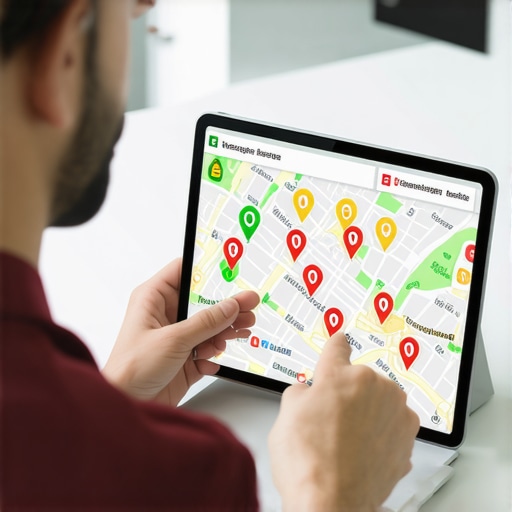
Ever spent hours tweaking your Google My Business profile, only to see little to no change in your local search rankings? I’ve been there. The frustration of pouring effort into a map profile that seems to get lost in the digital noise hit hard. One moment, I thought I had everything right—consistent NAP, engaging photos, plenty of reviews—and the next, my competitors were outranking me for key local searches. It was a wake-up call. I realized that even the most promising local listings need a strategic framework to truly shine in the crowded local SEO arena.
Why Your Map Profile Could Be Sabotaging Your Local Rankings
Map profiles are the foundation of local search visibility, yet many overlook their power or approach them haphazardly. Early on, I made the mistake of thinking that simply filling out a profile was enough. That’s like setting up a storefront and ignoring the window display. The truth is, a well-optimized map profile acts like a magnetic pole—drawing in local customers when done right. According to a recent study, 78% of local mobile searches result in an offline purchase, emphasizing the importance of standing out locally. But how do you ensure your profile isn’t just a digital placeholder, but a potent tool that climbs to the top of local rankings? That’s what I’ll show you.
Is Optimizing Local Listings Really Worth the Effort?
When I first started, I thought, “If I build it, they will come.” Wrong. I learned this lesson the hard way—initially neglecting key elements like accurate categories and consistent NAP data, I wasted precious time and lost potential customers. The mistake? Thinking that Google would rank my profile based solely on reviews. The reality is, local SEO success hinges on a comprehensive, strategic approach—something I wish I had known from the start. If you’re skeptical, I get it. But the evidence is clear: a strategic map profile framework can dramatically boost your visibility and conversions. Curious how to turn your local listing into a top-ranking powerhouse? Let’s dive into the step-by-step process that changed my game—and can do the same for you.
Audit Your Existing Profile
Start by reviewing your current Google My Business (GMB) profile. Check for consistency in your NAP (Name, Address, Phone number) across all online listings. I once found that my phone number was slightly different on my website and GMB listing, which hurt my rankings. Correcting these discrepancies immediately improved my local visibility. Use tools like Moz Local or BrightLocal to identify inconsistencies and fix them. Remember, uniform data signals to Google that your business is legitimate and trustworthy.
Optimize Your Business Information
Fill out every section of your profile with accurate, detailed information. Choose primary and secondary categories that precisely describe your services. For example, instead of just selecting “Plumber,” specify “Emergency Plumbing Service” if applicable. Write a compelling business description rich in keywords relevant to your local search terms, but avoid keyword stuffing. Incorporate location-specific phrases naturally. This helps Google understand your niche and improves your chances of ranking higher for relevant searches. For guidance, review the comprehensive framework outlined in this guide.
Use Consistent and Accurate Categories
Choosing the right categories is crucial. I once mistakenly selected a broad category that didn’t match my actual services. After updating to more specific categories, I saw a noticeable boost in local rankings. Be precise and strategic—use the primary category to define your core business and secondary categories for additional services. This layered approach enhances your relevance in local searches.
Enhance Visual Appeal with Photos and Videos
Upload high-quality photos that showcase your products, services, and storefront. I learned this the hard way when my listing lacked visuals, resulting in lower engagement. Regularly update your gallery to keep your profile fresh. Add videos where possible, as they can increase user engagement and signal activity to Google. Use descriptive filenames and captions with local keywords to boost SEO. Visual content acts like a storefront window—drawing in potential customers and encouraging clicks.
Solicit and Manage Reviews Effectively
Reviews are the social proof that can propel your profile to the top. I started by asking satisfied clients for reviews via email and in person. Respond promptly and professionally to all reviews, whether positive or negative, demonstrating active management. Incorporate keywords naturally into your responses to reinforce relevance. Positive reviews signal trustworthiness to Google, directly impacting your ranking potential. For a detailed review strategy, explore this resource.
Leverage Local Keywords Strategically
Integrate local keywords into your business description, services, and posts. Use tools like Google Keyword Planner or SEMrush to identify high-volume local search terms. For instance, “Best pizza in Downtown Chicago” can be incorporated naturally into your description and posts. This hyper-targeted approach helps Google connect your profile with relevant local queries. Remember, keyword stuffing can backfire—maintain a natural flow and focus on user value.
Build Local Citations and Backlinks
Ensure your business is listed on authoritative local directories like Yelp, TripAdvisor, and industry-specific sites. Citations reinforce your local relevance. I once expanded my citation footprint by submitting to niche directories, which resulted in higher rankings. Additionally, seek backlinks from local blogs, newspapers, and partner websites. These backlinks act as votes of confidence, boosting your profile’s authority in Google’s eyes. Use strategic outreach to build relationships with local influencers and media, and consider guest posting opportunities to gain valuable backlinks. For a proven framework, see this comprehensive guide.
Monitor and Adjust Your Strategy
Regularly track your rankings and profile insights using tools like Google Search Console and GMB Insights. Analyze what’s working and refine your tactics accordingly. For example, I noticed my engagement increased after posting weekly updates about my services—this kept my profile active and relevant. Consistent monitoring and adjustment ensure your efforts translate into sustained top rankings and increased local traffic.
Many local business owners fall prey to misconceptions about optimizing their Google Map profiles, often leading to ineffective strategies or even setbacks. Let’s dig deeper to uncover what most people get wrong and how understanding these nuances can give you a real edge in local SEO.
Why Do People Overlook the Power of Consistency in NAP Data?
One of the most persistent myths is that once your NAP (Name, Address, Phone number) is correct on your profile, you’re set. In reality, many forget that consistency across all online listings is crucial. Discrepancies—like a typo or slight variation—can confuse Google and dilute your local ranking signals. I’ve seen businesses lose rankings simply because their NAP data was inconsistent between their website, directory listings, and GMB profile. Regular audits and tools like Moz Local can help you maintain uniformity, which Google interprets as credibility. Skipping this step is a common trap that can sabotage your efforts.
Advanced Strategy: How Do Local Reviews Truly Impact Rankings?
It’s a widespread belief that reviews are just social proof. While reviews do influence customer decisions, their impact on rankings is nuanced. Google considers the frequency, velocity, and diversity of reviews, not just their quantity. Relying solely on positive reviews without managing their quality or response strategy can be a mistake. Responding to reviews with relevant keywords and engaging authentically signals activity and relevance to Google, boosting your profile’s authority. Avoid the misconception that reviews are passive; active review management is an advanced tactic that many overlook.
Beware of Keyword Stuffing in Your Business Description
Some think that stuffing keywords into their business description will automatically boost rankings. This is a trap. Google’s algorithms have evolved to prioritize user experience and relevance, penalizing keyword stuffing and unnatural language. Instead, woven-in local keywords should be natural and contextually relevant. This subtle nuance—balancing optimization with readability—is what separates top performers from the rest. For detailed guidance, check out this comprehensive framework.
Another common mistake is neglecting to update profile information regularly. Google favors fresh content and active profiles, so posting updates or new photos can make a significant difference. Plus, many forget the importance of leveraging local keywords in posts and Q&A sections, further enhancing relevance.
Have you ever fallen into this trap? Let me know in the comments.
Keeping your Google Map profile optimized over time requires more than just initial setup; it demands consistent effort, smart tools, and a strategic approach. Over the years, I’ve found that leveraging the right software and methods makes this process manageable and even enjoyable. In this article, I’ll share the specific tools I recommend and how I use them to ensure my local listings stay top-ranked and relevant.
Automate Data Consistency with Moz Local
One of the biggest pitfalls in local SEO is inconsistent NAP data across listings. I rely on Moz Local because it automates the audit process, scanning hundreds of directories and alerting me to discrepancies. This saves hours of manual checking and ensures my business information remains uniform, which Google rewards with better rankings. Additionally, Moz Local offers a simple way to manage listings from a centralized dashboard, making updates quick and painless.
Track Performance with Google Search Console and GMB Insights
To understand how my profile is performing, I use Google Search Console alongside Google My Business Insights. These tools provide real-time data on search queries, click-through rates, and user actions. I regularly review these metrics to identify what’s working and what needs adjustment. For example, if I see a drop in local search impressions, I might update my posts or review my keywords. Staying data-driven helps me refine my strategy effectively.
Use BrightLocal for Review Management
Reviews are a cornerstone of local SEO, but managing them can be overwhelming. I turn to BrightLocal because it consolidates review monitoring across platforms and automates review generation requests. Plus, it tracks review velocity and alerts me to new feedback. Responding promptly and strategically to reviews, especially with keywords naturally integrated, boosts my profile’s relevance and authority. This ongoing engagement keeps my profile fresh and trustworthy in Google’s eyes.
Optimize Photos with Canva and Adobe Lightroom
Visual content plays a vital role in attracting clicks. I use Canva for creating professional-looking images and videos that highlight my services and storefront. For editing high-quality photos, I prefer Adobe Lightroom because it allows precise adjustments, ensuring my visuals look sharp and appealing. Regularly updating my profile with fresh images signals activity to Google, which favors active listings.
Plan Content with SEMrush
To keep my profile engaging, I use SEMrush to identify trending local keywords and content ideas. This helps me craft posts and Q&A responses that are relevant and optimized. Incorporating local keywords naturally into my content ensures I stay visible for the most valuable searches. Regular content updates signal to Google that my profile is active and authoritative, which is critical for long-term success.
Looking ahead, I predict that local SEO tools will become even more integrated with AI-driven analytics, providing deeper insights and automation. To stay ahead, I recommend trying out these tools and adopting a routine that combines automation with personalized engagement. For example, regularly auditing your data with Moz Local and updating your visuals with Canva can keep your profile performing at its best. Remember, maintaining your local SEO is an ongoing process—embrace these tools to keep your business visible and thriving.
Ready to streamline your local SEO maintenance? Start by integrating one of these tools today and see how much easier keeping your profile in top shape can be. For more advanced strategies, explore this comprehensive guide.
The Hardest Lesson I Learned About Local SEO Maps
One of the toughest lessons I faced was realizing that even perfect NAP consistency isn’t enough. I thought fixing my business info once would keep me ranked forever, but Google needs ongoing signals of activity. Regular updates and engagement are vital to stay on top.
Three Myths About Google Maps Optimization That Held Me Back
I used to believe that reviews alone would propel my rankings. Turns out, reviews are just one piece of the puzzle—strategic keyword integration, accurate categories, and profile activity matter equally. Dispelling these myths transformed my approach entirely.
What Experts Won’t Tell You About Local Citations
Many overlook the importance of citation consistency across niche directories and local listings. I learned that a single discrepancy can hurt your rankings more than you think. Regular audits and citation management tools are game-changers for maintaining authority and visibility.
Curated Recommendations for Local SEO Mastery
My Essential Toolkit for Local Rankings
- Moz Local: Automates citation audits and updates, ensuring data consistency, which Google loves. I trust it because it saves me hours and keeps my info clean.
- BrightLocal: Manages reviews and tracks local performance metrics. Its unified dashboard makes reputation management effortless, boosting my confidence in my local SEO efforts.
- Canva & Adobe Lightroom: Creating eye-catching visuals that attract clicks. Visuals are often overlooked but are crucial for engagement and profile activity.
- SEMrush: Finds trending local keywords and content ideas, helping me stay relevant and visible for the right searches. It’s my secret weapon for content planning.
Push Your Limits and Embrace Action Today
Building a top-ranking local map profile isn’t a one-and-done task—it’s an ongoing journey. With the right insights, tools, and persistence, you can dominate your local search landscape. Start small, stay consistent, and watch your visibility grow. Remember, your local success story begins with actionable steps today. Curious about how to refine your local SEO game even further? Explore this comprehensive guide to elevate your strategy and stay ahead of the competition.
This post hits so many critical points I wish I knew when I started optimizing my local listings. I totally agree that consistent NAP data across all platforms is often underestimated, yet it’s so vital for Google’s trust signals. I’ve seen my rankings improve significantly just after auditing and cleaning up my citations. Also, the emphasis on visuals made me reconsider my strategy; I used to upload only a few basic photos, but now I realize that high-quality, keyword-rich images and videos can truly make a difference in engagement and clicks. The tools you mentioned, like Moz Local and BrightLocal, are game-changers—does anyone have experience with how often they should be used to keep data up-to-date without becoming overwhelming? I’d love to hear how others balance between automation and manual updates. It really is an ongoing process that requires consistent effort, but the rewards are definitely worth it.
This post really resonated with me, especially the part about NAP consistency and ongoing engagement. I used to think once I cleaned up my listings, that was enough, but I quickly learned that regular updates and fresh visuals keep Google ‘interested.’ I’ve been experimenting with scheduling weekly posts and photo updates, which seems to send positive signals to Google and helps my profile stay active. One challenge I faced was balancing automation tools like Moz Local with manual efforts—how often do others find it effective to run full audits versus just making small updates? For me, a monthly audit combined with weekly tweaks seems manageable without feeling overwhelming, but I wonder if anyone has found a more optimal rhythm. Also, I’d love to hear about how other local businesses incorporate more video content into their profiles, since I find videos really boost engagement but sometimes struggle with production ideas. Overall, maintaining a top-ranking map profile is definitely an ongoing journey, and I appreciate all the tips shared here.