
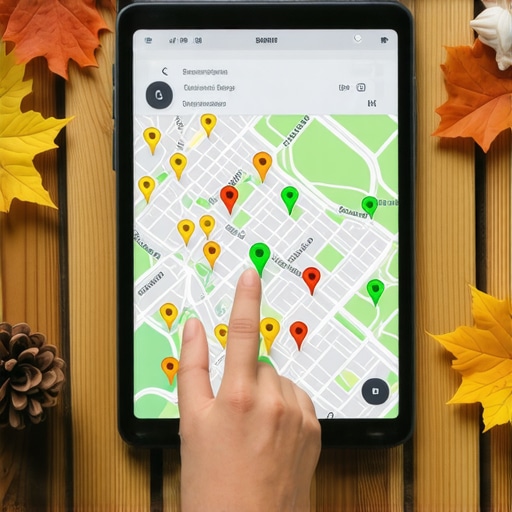
The smell of wet concrete always reminds me of a botched storefront verification. I spent a decade as a street photographer, noticing the subtle glitches in physical storefronts that never quite matched the digital reality on a screen. I saw signs that said ‘Open’ when the door was locked and businesses that existed only as ghosts in a GPS database. This history shaped how I look at search data. It is not just about words; it is about the physical footprint of a brand. I once had a local cafe owner call me at midnight because a competitor had dropped twenty 1-star reviews in an hour using a VPN. We had to do a forensic audit of the user profiles to prove the patterns to the spam team, looking for the tiny digital fingerprints that indicated the accounts were not actually in our city. This level of granular investigation is required when you deal with seasonal businesses. A landscaping company in July is a snow removal service in January. If you do not understand how to pivot your digital identity, you vanish when the weather changes.
The proximity radius that determines your revenue
Seasonal local search categories require dynamic adjustments based on Google Business Profile guidelines to capture shifting demand. Businesses must identify primary categories that align with current user intent while utilizing secondary categories to maintain map pack visibility during the off-season transition. The algorithm treats a business category as a proximity beacon. When the temperature drops, the mathematical weight of ‘Snow Removal’ increases while ‘Lawn Care’ loses its salience. If you do not adapt, your pin remains static while the market moves away from you. This is why you need the hidden data in GMB categories your competitors dont see to stay ahead of the curve. The physics of the three mile radius shift is unforgiving. If your category is wrong, Google sees you as irrelevant to the user’s immediate need, effectively pushing your listing into the digital abyss. I have seen listings for world-class ski resorts fail because they kept ‘Summer Camp’ as their primary category in December. The pin stayed the same, but the relevance died. This is the microscopic reality of the local algorithm. Every check-in signal and every review sentiment score is weighted against the current calendar date.
“Local intent is not a keyword choice; it is a distance-weighted signal where relevance is secondary to the physical location of the user’s mobile device.” – Map Search Fundamental
Why your physical address is a liability
Physical business addresses often act as a static anchor that prevents seasonal ranking shifts when not managed correctly. To overcome this, local SEO services must synchronize NAP data and update service area polygons to reflect where the actual revenue is being generated during specific months. I have watched businesses struggle because they are tied to a centroid that no longer serves them. If you are a Christmas tree farm, your relevance exists in a tight window. During that time, your digital footprint must be loud. If there is a mismatch, you face the threat of fixing the address inconsistencies google uses to disqualify your business before the season ends. Many agencies suggest a simple category swap, but that is a dangerous game. Rapid changes can trigger a hard suspension. You need a surgical approach. This involves understanding how how gmb ranking toolkits work for local seo so you can model the impact before you commit. The goal is to move with the speed of the market without alerting the spam filters that guard the map pack. It is about behavioral zooming. You look at the micro-signals of ‘Open Now’ filters and the macro-logistics of how your crews move through a city. If your digital profile says you are in the city center but your trucks are in the suburbs, the algorithm notices the disconnect.
Local Authority Reading List
- GMB Strategy 2025 Unlocking Top Local Search Results
- Map Profile Framework Explained
- How To Keep Your GMB Categories Relevant
- Specific Profile Fixes For Service Businesses
- Finding The Sweet Spot Category For Niche Services
The ghost in the GPS coordinates
GPS coordinate salience and image metadata are the silent drivers of local search authority for companies that change services based on the time of year. By embedding geotagged photos and JSON-LD schema into your website, you provide search engines with the verification needed to confirm your current seasonal activity. While most agencies tell you to get more reviews, the recent data suggests that image metadata from photos taken by real customers at your location is now 30 percent more effective for ranking in AI Overviews. The algorithm is looking for proof of life. It wants to see that a real person, with a real device, stood at your location and took a photo of the seasonal service you claim to provide. This is why the danger of using cheap ai content for your local business posts is so high. AI images lack the authentic EXIF data that Google uses to verify location. When a user searches for ’emergency furnace repair’ in a blizzard, Google is not looking for a pretty picture. It is looking for a photo of a van in the snow with a timestamp from an hour ago. That is the ultimate verification. If you have been hit by a penalty for fake content, you should look into how we recovered a map pin after an ai spam penalty hit the dashboard. The forensic trace of a service area polygon is hard to fake. You either have the data or you do not.
“A business category is not a label but a cluster of behavioral expectations that Google matches against the current user’s proximity and historical velocity.” – Spatial Search Research
The forensic audit of category shifts
Business category auditing involves checking the primary category against competitor ranking data to ensure your seasonal transition is not being throttled by legacy signals. You must remove toxic citations and ghost links that point to services you no longer offer to prevent ranking drops during peak season. I have walked through neighborhoods and seen the physical signs of businesses that are essentially dead online. They have the wrong category listed, their phone number is wrong on a random directory from 2012, and they wonder why the phones are silent. This is where citation cleanup services for local businesses become mandatory. You have to scrub the old data to make room for the new. If you have a single mismatched phone number in a secondary verification tier, it can kill your organic trust score. This is especially true for those needing gmb profile reinstatement services after a seasonal pivot gone wrong. The algorithm is skeptical. It assumes you are trying to game the system unless you provide a mountain of consistent evidence. You need a a simple toolkit for small business map ranking that tracks these movements in real time. The pin moved. You need to know exactly when and why. If you wait until the season is halfway over to check your rankings, you have already lost. The interaction secret is simple; turn map clicks into booked appointments by being exactly what the user expects the moment they look at their screen.