

Ever spent hours tweaking your Google My Business (GMB) profile only to see little to no improvement in your local rankings? I’ve been there. I remember those frustrating moments when I thought I understood the basics, but my visibility remained stubbornly low. That was my lightbulb moment — realizing that the secret isn’t just in having a profile, but in how you structure and optimize it for maximum impact. Today, I want to share with you a game-changing approach that transformed my local SEO results and can do the same for you.
Why Your GMB Profile Might Be Holding You Back
When I first started, I made a common mistake: I treated my GMB profile as just another online listing. I filled in the basics, added some photos, and hoped for the best. But search rankings? They stayed flat. The truth is, Google’s local ranking system is complex, and your profile needs to be a well-oiled machine. If you’re like I was, you might be missing out on crucial elements that Google uses to determine your relevance and authority in local searches.
According to Moz, local pack rankings are heavily influenced by the consistency and structure of your listing. So, why does this matter? Because a well-structured GMB profile can boost your visibility, attract more customers, and ultimately lead to more sales — if done right.
In this post, I’ll walk you through the proven framework that helped me climb the local search rankings faster than I ever thought possible. From optimizing your map profile to aligning your structure with Google’s ranking factors, I’ll share actionable steps that you can implement today.
Is Focusing on GMB Structure Really Worth It?
Early in my journey, I was skeptical. I wondered if all this effort on structure really made a difference. I even ignored some best practices, thinking that keyword stuffing or vague descriptions would do the trick. Spoiler alert: it didn’t. I learned the hard way that neglecting the core framework was a costly mistake. But once I adopted a strategic, structured approach, my rankings improved dramatically.
So, if you’ve ever wondered whether investing time into your GMB structure is worth it, I can tell you — absolutely. Properly aligned, optimized profiles are the foundation of local search success. Want to see how I did it? Check out the detailed framework here: Map Profile Framework Explained.
Build a Solid Foundation with Your GMB Profile
Start by claiming and verifying your GMB listing if you haven’t already. This step is non-negotiable — it proves ownership and unlocks all features. Once verified, focus on creating a detailed, keyword-rich profile that aligns with your business niche. Think of your GMB profile as a storefront window — it needs to be attractive and informative to draw in local customers.
Fill out every relevant field, including your business name, accurate address, phone number, and website URL. Use consistent NAP (Name, Address, Phone) details across all online platforms to boost credibility. Incorporate primary keywords naturally into your business description to signal relevance to Google.
Optimize Your Map Profile for Search Dominance
Harness the Power of Keywords
Identify local keywords your customers are searching for using tools like Google Keyword Planner or Ahrefs. Integrate these strategically into your business description, services, and posts. For example, if you run a bakery in Brooklyn, include phrases like “best bakery in Brooklyn” or “artisanal bread Brooklyn.” These keywords act like magnets, pulling your profile higher in local search results.
Enhance Your Visual Appeal
High-quality photos and videos are your storefront’s visual signage. Upload images that showcase your products, interior, exterior, and team. Google favors listings with frequent, fresh visuals. I once spent a Saturday photographing my cafe’s new menu and interior design. The increase in profile engagement and inquiries was remarkable. Remember to add alt text with relevant keywords for each image.
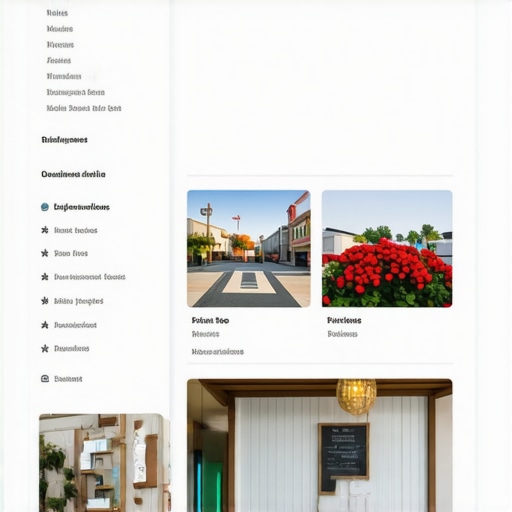
Visuals of a well-optimized GMB profile showing photos, reviews, and business info.
Leverage Structured Data and Consistency
Implement structured data markup on your website to reinforce your GMB information. Consistency is key — ensure your NAP details match exactly across your website, GMB, and other directories. Discrepancies confuse Google and hurt your rankings. Use tools like Moz Local or BrightLocal to audit your citations regularly and correct inconsistencies.
Encourage and Manage Customer Reviews
Reviews are social proof and ranking signals. Actively solicit reviews from satisfied customers, making it easy for them to share their experience. Respond promptly and professionally to all reviews, especially negative ones, demonstrating engagement and customer care. I once responded to a negative review with a helpful solution, turning a dissatisfied customer into a loyal one.
Utilize Posts and Attributes to Stay Engaged
Regularly publish updates, offers, or events via GMB Posts. Use relevant keywords and include calls-to-action to drive conversions. Also, leverage attributes like “wheelchair accessible” or “free Wi-Fi” to match customer preferences. These updates signal activity and relevance, which Google rewards with higher visibility.
By following this structured approach, you’ll create a GMB profile that not only attracts clicks but also ranks higher in local searches. Remember, consistency, quality, and engagement are your best allies in dominating local SEO in 2025. For an in-depth walkthrough, check out the Map Profile Framework Explained.
Many local business owners fall into traps rooted in misconceptions about optimizing their GMB profiles. Let’s dig deeper into what most people get wrong, and how avoiding these pitfalls can give you a real edge in local search rankings.
Why do so many believe keyword stuffing helps in GMB optimization?
One pervasive myth is that cramming as many keywords as possible into your business description or posts will boost your rankings. In reality, Google’s algorithms have evolved to prioritize quality, relevance, and user experience over keyword density. Overstuffing can even trigger penalties, making your listing less visible instead of more. Instead, focus on integrating keywords naturally within a well-structured profile, aligning with Google’s current ranking factors. For a comprehensive approach, review the Map Profile Framework Explained.
Beware of neglecting your review management
Another mistake is underestimating the power of reviews. Many think that reviews are just social proof, but they are also critical ranking signals. Responding to reviews, especially negative ones, boosts your engagement metrics and signals active management to Google. However, some believe that reviews happen automatically if your service is good enough. The truth is, proactive review solicitation and reputation management are essential. For advanced strategies, see the Ultimate GBP Structure Map Profile Framework.
What about the misconception that only the profile matters?
Many assume that optimizing the GMB profile alone guarantees high rankings. While the profile is foundational, local SEO success also depends on citation consistency, structured data, and website authority. Discrepancies in NAP details across directories confuse Google, and neglecting structured data can limit your visibility. For a nuanced understanding of these interconnected factors, check out Unveiling the GBP Structure Keys.
Finally, beware of the trap of thinking that once optimized, your profile can be set and forgotten. Local algorithms favor active, engaging profiles. Regular updates, new photos, posts, and review responses keep your listing fresh and relevant. Remember, the local search landscape is dynamic, and staying ahead requires continuous effort.
Have you ever fallen into this trap? Let me know in the comments. By understanding and avoiding these common myths, you can refine your strategy and truly harness the power of Google My Business for local dominance.
Keeping your Google My Business (GMB) profile optimized over time can feel overwhelming, especially as algorithms evolve and local competitors step up their game. To maintain your visibility and stay ahead in local SEO, leveraging the right tools and establishing systematic routines is essential. In this post, I’ll share the specific tools I personally use daily, how to set up an effective maintenance workflow, and where I see future trends heading in GMB management.
How do I maintain my GMB profile for sustained success?
The first step is adopting a disciplined approach that combines automation with manual checks. I rely heavily on tools like BrightLocal and Moz Local for citation management and consistency audits. These platforms automatically scan your online presence, flag discrepancies in NAP details, and suggest corrections, saving me hours of tedious manual review. Regular citation consistency is vital because inconsistent data confuses Google and hampers rankings. I schedule bi-weekly audits using these tools to ensure all directories stay aligned.
For review management, I use Google’s own review alerts and reputation management software like Podium or ReviewTrackers. These tools notify me immediately when new reviews are posted, enabling quick responses. I’ve found that responding within 24 hours improves customer engagement and signals activity to Google, which benefits ranking longevity. Also, I set up automated review solicitation campaigns via email or SMS, targeting recent customers with personalized requests — a tactic I’ve personally found boosts review volume without seeming spammy.
Content freshness remains crucial. I use GMB’s native scheduling feature combined with a content calendar managed through Trello or Asana. This helps me plan regular posts, updates, and special offers, ensuring my profile remains lively and relevant. For visual updates, I utilize Canva for quick, professional-quality images that highlight new products or services. Consistently adding fresh visuals and posts signals ongoing activity, which is a ranking factor.
What about tools for tracking long-term results?
To measure the impact of these efforts, I rely on Google Analytics integrated with my website and SEMrush for keyword tracking. These tools help me monitor traffic sources, search impressions, and keyword rankings over time. I review performance monthly, adjusting my strategy based on data trends. I also keep an eye on Google My Business Insights directly within the dashboard to see how my profile performs in local search and map views.
Looking ahead, I believe local SEO management will increasingly benefit from automation powered by AI. Future tools may offer predictive analytics to highlight areas for improvement before ranking drops occur. Staying adaptable and investing in these emerging technologies will be key to maintaining dominance in local search.
Why is consistent effort so critical?
Algorithms are constantly shifting, and competitors are always optimizing their profiles. Without a disciplined maintenance routine, your profile can fall behind, losing visibility and potential leads. I recommend setting aside at least one hour weekly to review citations, respond to reviews, and update content. This routine ensures your GMB profile remains a strong, authoritative asset in your local SEO arsenal.
Start implementing these tools and routines today, and watch your local rankings stabilize and grow. For a comprehensive framework that aligns all these activities seamlessly, check out the Streamline Your Local Listing Framework. Remember, in local SEO, consistency and proactive management are your best allies for long-term success.
< >
>
Reflecting on my journey with Google My Business optimization, I realized there are lessons that no amount of generic advice can teach. These insights stem from real-world experience and a willingness to challenge conventional wisdom. Here are some of the most impactful lessons I learned about structuring and optimizing your GMB profile for maximum local search success:
- Emphasize Quality Over Keyword Stuffing: I once believed that cramming keywords into my profile would skyrocket my rankings. It didn’t. Instead, I learned that Google values natural language, relevance, and user experience. Integrate keywords thoughtfully into your business description and posts, but prioritize readability and authenticity.
- Consistency Is Your Secret Weapon: Discrepancies in NAP details across directories can sabotage your efforts. I found that regular audits using tools like BrightLocal kept my citations clean and consistent, which directly improved my local rankings. Never underestimate the power of a unified online presence.
- Engagement Outperforms Optimization Alone: Responding to reviews, posting regularly, and updating photos kept my profile active and signals to Google that my business was vibrant and trustworthy. Engagement is a dynamic element that can’t be automated away; it requires genuine effort.
- Visual Content Is a Game Changer: Investing in high-quality photos and videos not only attracted more clicks but also increased customer trust. Google favors listings with fresh visuals, and a consistent visual strategy helped my profile stand out in local searches.
- Continuous Learning and Adaptation Matter: The local SEO landscape evolves rapidly. I made a habit of staying updated with the latest best practices and algorithm changes by following trusted sources and community insights. This proactive approach kept my rankings resilient and ahead of competitors.
My Essential Toolkit for GMB Success
Over the years, I’ve relied on certain tools that have become indispensable. These tools help me streamline my efforts, maintain high standards, and track results effectively:
- BrightLocal: For citation audits and local listing management. It’s reliable for spotting inconsistencies that harm rankings.
- Google Analytics & Search Console: To monitor website traffic and map how local searches translate into visits and conversions.
- Canva: For creating eye-catching visuals and updates that keep my profile fresh and engaging.
- Podium: For review management and solicitation, ensuring I respond promptly and build a positive reputation.
Your Turn to Make a Difference
Optimizing your Google My Business profile is more of an art than a checklist. It requires insight, consistency, and a willingness to adapt. Now that I’ve shared my personal lessons and tools, it’s your turn to apply these strategies and see the results unfold. Remember, your local SEO success hinges on the genuine effort you invest today.
What’s the biggest challenge you face with your GMB profile? Share your experience below and let’s learn together!