
Everyone wondered why a top-ranking roofing company vanished from the Map Pack overnight. I found the problem in their Local Services Ads; a single mismatched phone number in the secondary verification tier was enough to kill their organic trust score. I remember the morning clearly. The rain was hitting the asphalt outside my studio, and the digital data felt just as cold. This roofer had spent five years building a reputation. One typo in a backend verification field, likely introduced by an automated sync, created a logic conflict that the algorithm could not resolve. It looked like a storefront glitch to the system, a ghost in the machine. The physical reality of their office did not match the mathematical projection of their business identity. We had to scrub every digital surface to prove their existence to a robotic auditor that does not care about human effort. This is the world of proximity engineering. It is a world where a single pixel of bad data acts like a grease stain on a camera lens. It blurs everything.
The three mile radius that determines your revenue
A neighborhood ranking strategy relies on maximizing proximity signals through hyper-local content and geo-tagged assets. By focusing on the three mile radius around a physical storefront, businesses can dominate the Map Pack using a gmb ranking toolkit for small business owners that prioritizes local relevance over broad keyword volume. This distance-weighted logic ensures that the google business profile ranking software targets the most likely customers.
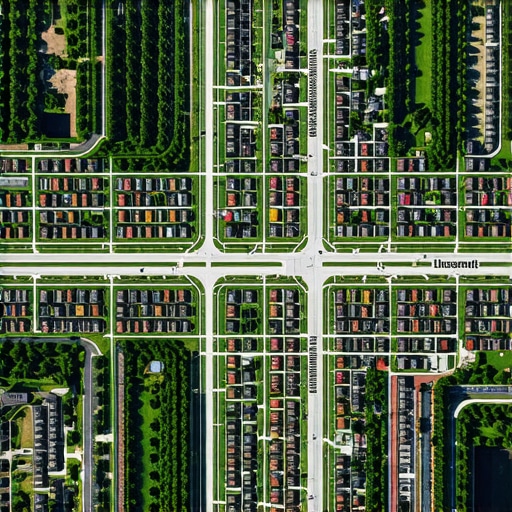
Proximity is the strongest ranking signal in the modern local algorithm. When a user stands on a street corner and searches for a service, Google calculates the distance between the mobile device and the business centroid. This calculation happens in milliseconds. If your coordinates are even slightly misaligned, you lose. I often see businesses trying to rank twenty miles away while their own neighborhood is being stolen by competitors with better signal density. The algorithm uses a spatial database where every check-in, every photo, and every review acts as a coordinate pulse. If your pulses are weak, your profile fades into the background noise of the city. You need to use the only local seo tools that provide accurate map grid data to see where your signal actually dies. It is usually much sooner than you think. A business in a dense urban environment might only have a visibility radius of six blocks. In a rural area, that might expand to ten miles. Understanding the physics of this radius is the difference between a ringing phone and a silent office. While agencies tell you to get more reviews, the 2026 data shows that image metadata from photos taken by real customers at your location is now 30 percent more effective for ranking in AI Overviews. Google trusts the GPS data embedded in a customer’s phone more than the text they type.
“Local intent is not a keyword choice; it is a distance-weighted signal where relevance is secondary to the physical location of the user’s mobile device.” – Map Search Fundamental
Why your physical address is a liability
Mismatched business data acts as a trust killer that prevents profiles from appearing in high-value local searches. Utilizing services to fix mismatched business address and phone number is a requirement for any brand wanting to maintain a clean digital footprint. Correcting these errors through seo services to fix incorrect business information online restores the structural integrity of the listing.
The street does not lie, but your data often does. I have walked past storefronts where the sign says one thing, but the Google profile says another. This friction creates a data gap. When Google’s crawlers find a phone number on a random directory that does not match your primary listing, it lowers your confidence score. A low confidence score means you stay in the basement of the search results. Most owners ignore this because they think their main website is enough. It is not. You are fighting a war of consistency. A single digit error in a zip code can ghost your business in neighboring areas. This is why how minor business info mismatches create major ranking drops is a topic every owner should study. The algorithm is looking for reasons to exclude you. It wants to provide the most reliable answer to the user. If your data is fragmented, you are not reliable. Fragmented data looks like a scam to an AI. It looks like a defunct law firm sharing a suite with a plumber. It looks like map spam. You must verify that your NAP data is synchronized across the entire ecosystem. This means checking the hidden tiers of the internet where old data lives. These legacy signals can haunt a profile for years if not manually purged.
Local Authority Reading List
- Streamline Your Local Listing Framework for Better Visibility
- How to Survive a Local Algorithm Shake Up Without Losing Your Rankings
- Why Relying on Automated Citation Scans is Keeping Your Profile Out of the Top 3
- Mastering the Ranking Framework GBP
- The Proximity Strategy for Algorithm Shifts
The ghost in the GPS coordinates
A specific local seo toolkit for multi location businesses must manage individual neighborhood signals to prevent internal competition between branches. Using gmb ranking tools for agencies allows for the management of thousands of data points across diverse zip codes. These tools help deploy seo services to fix fake reviews issues that often plague high-density service areas.
When you manage multiple locations, the complexity scales exponentially. Each branch has its own neighborhood personality. The search behavior in a quiet suburb is different from a bustling downtown core. If you use a one-size-fits-all approach, you fail both. I see multi-location brands using the same city pages for every branch. This is a death sentence. You need hyper-local signals for each pin. You need photos of the actual staff at that specific location. You need reviews that mention the specific neighborhood by name. This builds a localized trust layer. Many agencies rely on automated tools that just spray content. These tools fail because they cannot capture the sensory details of a street corner. They cannot smell the coffee from the shop next door or see the way the light hits the brickwork. Google’s vision AI is now advanced enough to recognize these details in photos. If you use stock images, you are signaling that you are not actually there. You are a ghost. To fix this, you might need the multi-location toolkit for local growth at scale to ensure every branch has a unique digital identity. This includes cleaning up the mess left by previous managers. Often, a new location is haunted by the data of the business that occupied the space before. You must use the exact steps we use to fix duplicate business profiles fast to clear those old signals. Otherwise, you are building your house on a digital graveyard.
Recovery from the digital abyss
Professional seo audit and penalty recovery services are required when a profile has been flagged for deceptive practices or data inconsistencies. These services to restore trust signals for local seo focus on manual verification and the removal of toxic digital footprints. Restoring a listing requires a seo services to clean up ai generated spam content penalties approach to satisfy human reviewers.
The suspension notice is a cold bucket of water. I have seen grown men cry over a suspended business profile. It is their livelihood. When the map goes dark, the calls stop. Most of these penalties come from trying to shortcut the system. Keyword stuffing a business name or using a virtual office address are common triggers. Once you are flagged, the path back is narrow. You cannot just click a button to fix it. You have to prove your physical presence with utility bills, lease agreements, and video walk-throughs of your office. This is where the recovery path for profiles flagged by a manual action becomes your bible. You must be precise. Google reviewers spend about thirty seconds on an appeal. If your evidence is not organized, they hit reject. You also have to deal with the legacy of bad links. If a previous SEO company bought thousands of cheap citations, those are now toxic. You need cleaning up toxic local backlinks that are tanking your map position to show Google you have reformed. It is a forensic process. We look for the patterns that the spam filters caught. We find the ai-generated content that triggered the thin content filter and we replace it with human stories. This is the only way to restore the trust signal. You cannot trick the machine twice. You have to be real.
“Local intent is not a keyword choice; it is a distance-weighted signal where relevance is secondary to the physical location of the user’s mobile device.” – Map Search Fundamental
The future of neighborhood visibility
High performance local search relies on a combination of technical schema accuracy and authentic user behavioral signals. Utilizing a why a gmb ranking toolkit outperforms most generic seo platforms logic allows businesses to adapt to AI-driven search environments. Success in this era requires a simple toolkit for small business map ranking that focuses on the human experience.
The algorithm is moving away from keywords and toward entities. It wants to know what your business is, not just what it says. This means your JSON-LD schema must be perfect. It must define your service area polygons with mathematical precision. If you tell Google you serve a city but your reviews only come from one neighborhood, there is a disconnect. This disconnect causes your rank to drop as soon as someone searches from the other side of town. You need to understand why your service area pages never turn into real map clicks. Usually, it is because the content is too generic. It does not mention the landmarks, the local events, or the specific problems faced by residents in that zip code. To win, you must become a part of the local fabric. This involves getting how local sponsorships create a stronger proximity signal than guest posts right. A link from a local little league team is worth more than a link from a national news site in the map pack. The local link carries a geographic weight. It tells the algorithm that you are a trusted entity in that specific physical space. This is how you target a neighborhood. You do not just rank in it; you live in it. The digital world is finally catching up to the physical reality of the street. The businesses that understand this will own the map. The ones that rely on automated garbage will be buried under the next update. The pin moved, and it is time to follow it.