
I stood on a rain-slicked sidewalk in Chicago, the smell of wet concrete rising from the gutters, staring at a storefront that existed in the digital realm but remained a vacant lot in the physical world. As a street photographer of the data landscape, I look for these glitches. They are the forensic traces of why the Map Pack breaks. Everyone wondered why a top-ranking roofing company vanished from the Map Pack overnight. I found the problem in their Local Services Ads. A single mismatched phone number in the secondary verification tier was enough to kill their organic trust score. This wasn’t a keyword issue. It was a proximity beacon failure. The mismatched phone number sank their local seo efforts faster than any algorithm update ever could.
The three mile radius that determines your revenue
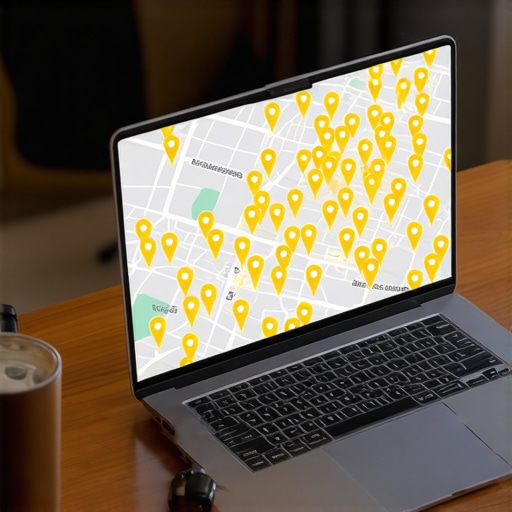
Local search results are proximity-weighted signals where the physical location of the user mobile device dictates visibility. Google uses a distance-weighted relevance score to determine if a business profile appears in the three pack. The mathematical weight of local review sentiment and GPS coordinate salience outranks traditional backlink authority. Success requires understanding that the Map Pack is a dispatch system. When a searcher moves three blocks south, the entire competitive grid resets. Many agencies ignore this, selling a city-center ranking that means nothing to the customer standing on the edge of the service area. You must stop using outdated software and switch to dynamic local grid tracking to see where your leads are actually leaking.
“Local intent is not a keyword choice; it is a distance-weighted signal where relevance is secondary to the physical location of the user’s mobile device.” – Map Search Fundamental
The ghost in the GPS coordinates
GPS coordinate salience is the microscopic math of local search visibility. Google tracks the movement of mobile devices to verify that a business is a real destination. These check-in signals provide forensic proof of a physical entity presence. If the coordinates on your profile do not align with user movement patterns, your rankings will collapse. I have seen businesses fail simply because their pin was dropped on the wrong side of a large shopping center. This creates a disconnect between the driving directions and the actual storefront entrance. If you are struggling with a profile that refuses to move, it might be time for recovering map visibility after taking over a profile that was poorly managed. The algorithm is looking for a perfect match between the digital map and the physical world. When that match fails, the trust score drops to zero. You might find yourself ranking on page one but missing from maps because of these tiny technical errors.
The hidden data in category selection
Strategic category research involves identifying low-competition sub-categories that trigger local justification snippets. Most businesses choose a primary category and ignore the power of secondary labels. Analyzing mobile versus desktop category display reveals opportunities to capture leads your competitors overlook. Seasonal category adjustments can also boost visibility during peak service periods. Choosing the wrong category is like speaking the wrong language to the Google bot. You need to understand why your category choices are different on mobile vs desktop to truly dominate the local market. Many people think they can just set it and forget it. They fail to see the hidden data in gmb categories that can provide a significant advantage. If you are a niche provider, finding the sweet spot category is the difference between a phone that rings and a silent office.
Local Authority Reading List
- GMB Strategy 2025: Unlocking Top Results
- Mastering the Ranking Framework for 2025
- Specific Profile Fixes for Service Businesses
- Why a GMB Ranking Toolkit Outperforms Generic Platforms
- How to Report and Remove Competitor Spam
Why your physical address is a liability
Physical address consistency is the foundation of the local trust layer. Inconsistencies in your NAP data across the web signal to Google that your business might be defunct or fraudulent. Address rentals and virtual offices are high-risk targets for hard suspensions. A verified utility bill at the exact GPS pin is often required to maintain visibility in competitive markets. I despise the agencies that sell virtual offices. They are building on sand. If you have been hit, you need a step-by-step fix for a banned business profile immediately. Google is aggressive about fixing the address inconsistencies that lead to disqualification. If your business moves, you must follow the right way to use redirects during a local seo migration to keep your power. Mismatches create friction, and friction kills rankings. I have spent months fixing hard suspensions for service area businesses that tried to take shortcuts with their physical location data.
“The proximity of the searcher to the business is the single most significant factor in local pack rankings, often overriding traditional authority signals like backlinks.” – Vicinity Update Research
The forensics of review sentiment and spam
Review sentiment analysis uses natural language processing to weigh the legitimacy of customer feedback. Real customer reviews contain specific spatial references and image metadata that prove physical interaction. Fake reviews often lack these markers and can trigger a spam flag. Cleaning up toxic legacy signals is required for long-term map pack stability. I remember a cafe owner who was nearly ruined by a VPN-based review attack. We had to do a forensic audit of the user profiles to save their reputation. You must know how to handle a sudden wave of fake 1 star reviews without panicking. Using the reputation toolkit that helps you get real feedback is better than any bot-driven strategy. Automated systems often fail, and you must understand why your reputation management software isnt fixing the problem. It takes a human touch and a review management strategy that builds real trust to survive in the modern map pack. Always watch for the danger of ignoring old black hat footprints that might still be haunting your listing.
Technical hurdles and the indexing loop
Technical crawl errors on location-specific pages prevent Google from connecting your website authority to your business profile. Hidden schema errors and broken code snippets block the display of rich results like review stars. Ensuring that your city pages are visible to search crawlers is a requirement for ranking in multi-location service areas. If your site is a mess, your map profile will suffer. You need a step-by-step fix for local page indexing obstacles to ensure the bot sees your data. Many businesses have technical crawl errors keeping city pages invisible to the algorithm. Finding and repairing schema errors is a high-priority task. Without proper structure, the missing link between organic keywords and map visibility remains broken. Use the only local seo tools that provide accurate map grid data to diagnose these issues before they become permanent penalties.
A surgical approach to market share
Reporting map spam is a strategic necessity for reclaiming market share from fraudulent competitors. Keyword-stuffed business names and fake pins crowd legitimate businesses out of the local pack. A surgical approach to identifying and removing these listings can provide an immediate boost in visibility for verified local merchants. I have seen neighborhoods where half the listings were fake. You have to learn how to fight map spam without getting flagged yourself. It is about cleaning up spammy business names and reporting fraudulent pins effectively. This is how you reclaim your territory. If you are an agency, you need the agency framework for managing multiple profiles to handle this at scale. Don’t let duplicate profiles or cheap ai content destroy your hard-earned reputation. Invest in the service business toolkit and start spotting where your leads are leaking today.