
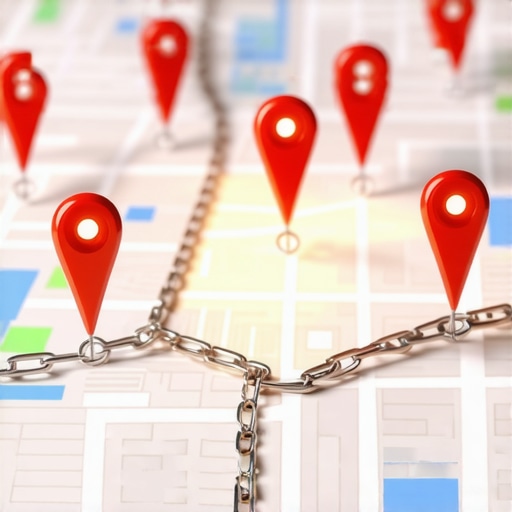
The connection between your traditional organic ranking and your local map visibility is established through geographic relevance, data consistency, and proximity signals. To rank in the local Map Pack, your website must validate the physical location of your business while maintaining a flawless NAP (Name, Address, Phone Number) footprint across the web. I sit here in my office surrounded by the scent of peppermint and old paper; the smell of a town that remembers when a handshake meant a contract. My desk is cluttered with maps and local directories. I have watched local merchants lose everything to a single digital error. I remember a specific case that keeps me up at night. It was the centroid collapse. A top ranking roofing company vanished from the Map Pack overnight. They had decades of history. I found the problem hidden in their Local Services Ads. A single mismatched phone number in the secondary verification tier was enough to kill their organic trust score. Google saw the conflict. It decided the business was no longer verifiable. The pin vanished. The phones stopped ringing. This is the reality of the hyper-local layer. It is a math problem built on trust.
The ghost in the GPS coordinates
Local search algorithms prioritize proximity, relevance, and prominence by verifying the latitude and longitude of a business against its digital mentions. When these coordinates conflict with on-page SEO data, the ranking signal fractures and visibility drops. A business is not just a name. It is a set of coordinates in a spatial database. Every time a customer searches from their mobile device, a calculation occurs. The algorithm measures the distance from the user to your front door. It also measures the distance between your claimed address and your citations. If you are struggling with how tiny N-A-P discrepancies ghost your business, you are fighting a ghost. You cannot win with keywords alone. The map cares about where you are. It cares about the physical evidence of your existence. I hate seeing national chains pretend to be local. They use virtual offices. They use address rentals. They dilute the trust of the neighborhood.
“Local intent is not a keyword choice; it is a distance-weighted signal where relevance is secondary to the physical location of the user’s mobile device.” – Map Search Fundamental
Why your physical address is a liability
Physical addresses become ranking liabilities when they are associated with shared suite numbers, virtual offices, or spam-heavy buildings that trigger Google’s automated suspension filters. The algorithm views proximity as a risk factor. If you share a building with ten other businesses that have been flagged for spam, your profile is guilty by association. This is why fixing hard suspensions for service area businesses is so difficult. You are not just proving you exist. You are proving you are not a part of the local noise. I have seen honest plumbers lose their listings because they shared a suite with a defunct law firm. Google wanted a utility bill under the exact GPS pin. They wanted a video walk-through of the office.
Local Authority Reading List
- Mastering the Ranking Framework for 2025
- Step-by-Step Fix for Banned Profiles
- The Mismatched Phone Number Trap
- Cleaning Up Toxic Legacy Signals
The three mile radius that determines your revenue
Proximity math dictates that local visibility is highest within a three mile radius of the business location, with rankings declining sharply as the distance from the searcher increases. To expand this radius, you must build location-specific authority through niche citations and local backlinks. Most owners think they can rank across the whole city. They cannot. The algorithm is a dispatch system. It wants the closest solution for the user. If your service area expansion is failing, it is because your proximity signal is too weak. You need more than just a list of zip codes. You need local justifications. You need to show Google that your team is actually in those neighborhoods.
“Relevance is measured by the proximity of the business entity to the searcher, modified by the historical behavioral signals of previous users in that exact spatial cell.” – Location Intelligence Research
Behavioral signals that move the pin
User behavior including click-through rates, photo interactions, and direction requests serves as the primary trust signal for Google to increase your map ranking. While keywords matter, the algorithm values what people do more than what you say. Customer photos are the new currency. Photos taken by real customers at your location contain metadata. This metadata proves your business is real. It proves people visit you. This is why the specific photo update we used for a local client doubled their clicks. It was not a professional shot. It was a candid photo from a happy customer. It looked real. It smelled like authenticity.
The invisible penalty of a domain migration
Domain migrations often cause GMB ranking drops because the link between the website and the profile is severed, leading to a loss of local authority and historical trust. You must use a proven strategy to migrate rankings without losing power. I see this every month. A business changes its name. They buy a new domain. They forget that the profile is tethered to the old URL. The rankings crash. The trust is gone. You are effectively starting over in the eyes of the map algorithm.
Cleaning up the digital debris
Citation cleanup services identify and resolve fragmented business data that confuses search engines and prevents your profile from appearing in the top three map results. Fragmented data is a slow poison. It starts with an old phone number on an obscure directory. Then it moves to a misspelled street name on a social profile. Soon, Google sees five different versions of your business. It stops trusting any of them. You need cleaning up unstructured citations to restore your integrity. I have no patience for agencies that sell citation blasts. They just add to the mess. You need a surgical approach. You need to find the ghost citations and kill them.
Toolkits that actually move the needle
Top Google Business Profile SEO toolkits provide accurate map grid data and competitor spam analysis, allowing you to see exactly where your proximity signal is failing. Most software is junk. It gives you generic reports. It tells you what you already know. You need a GMB ranking toolkit that shows you the local grid. You need to see how you rank at the corner of 5th and Main. You need to see who is using fake names to steal your leads. If you are a chiropractor, you are likely losing new patient leads to people with half your reviews simply because their map settings are better. Stop using canned responses. Stop buying bad links. Use the tools that provide real data. The pin moved. It is time to move with it.