
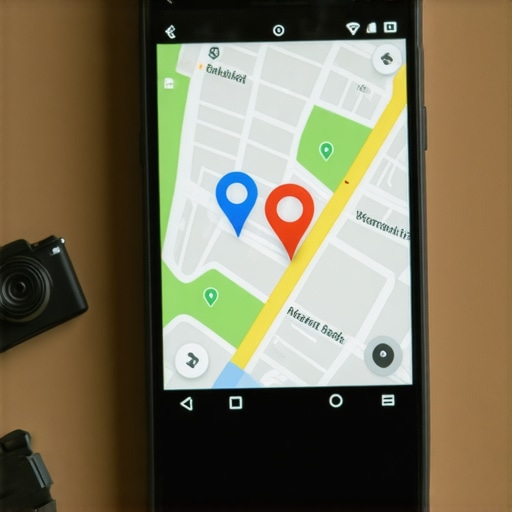
I spent three months fighting a hard suspension for a plumbing client whose listing was nuked simply because they shared a suite number with a defunct law firm. Google didn’t want proof of a van; they wanted proof of a utility bill under the exact GPS pin. I remember the smell of wet concrete after a rainstorm while I stood outside their office taking time-stamped photos of the directory sign. This is the reality of the local search layer. It is a spatial battle where the algorithm treats your business like a coordinate in a coordinate system rather than a living entity. If you think five stars and a friendly response will save you from a proximity filter, you have already lost the war. The map pack is a mathematical construct. It cares about the physics of distance and the forensic trace of your digital footprint more than your customer service record. Every day I see the same glitch in the storefront data where a legitimate business is invisible because their centroid is mathematically overlapped by a spammer.
The ghost in the GPS coordinates
Local search visibility depends on spatial authority and entity signals rather than just review volume. Proximity remains the dominant ranking factor for Google Business Profiles. Technical accuracy in your geographic coordinates and service area polygons determines your visibility radius in competitive urban markets. The pin moved. That is often the only explanation a business owner gets when their leads dry up overnight. When we talk about the logic of a check-in signal, we are talking about how Google uses mobile device pings to verify that a business actually exists where it says it does. This is why the local seo toolkit that actually understands proximity limits is required for any real analysis. If your customers never actually visit your physical location with their GPS enabled, Google begins to doubt your physical salience. This doubt manifest as a ranking drop. Reviews are easily faked; physical movement is not. I have watched profiles with thousands of reviews get buried by a competitor with ten reviews simply because the competitor was five hundred feet closer to the searcher.
Why your physical address is a liability
Physical locations act as the primary anchor for local search relevance but can trigger filters if shared with other businesses. Google uses optical character recognition on street view imagery to verify signage. Address inconsistencies across the web create data conflicts that lead to immediate profile suspension. The old ways of renting a virtual office for a cheap presence in a city center are dead. I have seen countless businesses get flagged because they used a coworking space that Google already blacklisted. If you need why your profile was flagged for spam content and how to appeal it, you likely missed the fact that your suite number was a known spam hub. The algorithm sees a virtual office and assumes fraud. It is looking for a unique entrance and permanent signage. When you try to move into a new territory, you often need local seo services to fix ranking loss after moving city or service area because the transition of geographic authority is not instantaneous.
The three mile radius that determines your revenue
Proximity based ranking drops occur when the algorithm tightens the search radius around the user. Competitor density affects how far your profile can reach into neighboring zip codes. Managing local signals requires a focus on spatial relevance and verified service area boundaries. The map does not care about your city limits. It cares about the three mile radius from the searcher’s phone. This is why tools that actually track local grid movements instead of just city centers are so important. A city center rank is a vanity metric. If you are not ranking in the neighborhoods where your customers live, you are invisible. We often use how to use a ranking toolkit to target specific local neighborhoods to identify where the signal drops off. It is often a hard line in the sand. One block you are first, the next you are eleventh. This is the physics of the vicinity update.
“Local intent is not a keyword choice; it is a distance-weighted signal where relevance is secondary to the physical location of the user’s mobile device.” – Map Search Fundamental
The forensic trace of a service area polygon
Service area businesses must define geographic boundaries that align with their actual service delivery history. Google analyzes historical location data to verify if a business truly operates within a claimed area. Overextending your service area can lead to a proximity based filter. For plumbers and locksmiths, the address is hidden but the centroid still exists. If you try to claim a fifty mile radius without the data to back it up, the algorithm will ignore you. I have seen businesses recover by using the keyword strategy that moves the needle for service area businesses which focuses on hyper local intent. You cannot just blanket a city. You have to win it neighborhood by neighborhood. The mathematical weight of local review sentiment is real, but it only kicks in once you pass the proximity filter. If you are not in the top twenty results for distance, your five star rating will never be seen.
Why proximity signals trump sentiment scores
Relevance and distance are the two primary pillars that outweigh user sentiment in high competition categories. A searcher’s physical location creates a dynamic results page that changes as they move. Strategic local search optimization focuses on increasing the geographic reach of a profile. I once saw a cafe with a 4.9 rating lose all its traffic to a 3.2 rated chain because the chain was closer to the subway exit. Google assumes that for local needs, convenience is king. You need why your organic traffic is growing while your map leads are dying to understand this disconnect. Your website might rank globally, but your map pin is a local prisoner. To break out, you need to fix the technical foundation. Using why manual schema tagging is better than automated local seo tools allows you to feed the exact geographic coordinates of your service zones directly to the crawlers.
The math of centroid calculation in modern maps
Centroid theory explains how Google identifies the center of a search area and ranks businesses based on their distance from that point. Businesses located closer to the industry’s local hub often see higher baseline rankings. Understanding geographic hubs is essential for multi location strategy. If you are in a dense urban area, you are likely suffering from the duplicate filter. This is where seo services to fix gmb profile stuck in filter for duplicated locations become a necessity. Google only wants to show one of each type of business in a small area. If you are too close to a competitor in the same category, one of you will be hidden. It is a digital exclusionary zone.
Fixing the filtered results in dense urban centers
Filtering happens when multiple businesses with the same category occupy the same building or city block. Google prioritizes the business with the strongest established entity authority. Expanding your category selection can sometimes bypass these localized filters. I hate seeing agencies sell citation blasts to dead directories as a fix for this. It does nothing. You need the local seo toolkit for cleaning up duplicate profile data to see what the algorithm actually sees. Sometimes the fix is as simple as changing a primary category. Sometimes you need the category tweak that fixed our plateaued local search volume to find a niche that isn’t as crowded.
Local Authority Reading List
- GBP Strategy 2025: Unlocking Results
- Finding Competitor Weak Spots
- Starting with a Profile Audit
- Pulling the Pin into the Top 3
The danger of toxic backlink profiles in local search
Backlink profiles for local businesses must remain geographically relevant to avoid triggering spam filters. Toxic links from irrelevant international domains can destroy the local trust score of a business profile. Cleaning up these footprints is a requirement for ranking recovery. Most people forget that your website and your map profile are linked. If your site is a mess, your map pin will suffer. You might need seo services to fix toxic backlink profile if you have been buying cheap links. Google looks for local relevance. A link from the local little league team is worth more than a link from a massive global news site that has no geographic context.
Review repair and the battle against fake feedback
Review repair services focus on identifying and removing fraudulent feedback that violates Google’s terms of service. Forensic analysis of reviewer profiles can reveal patterns of coordinated attacks by competitors. Maintaining a clean review profile is vital for conversion and long term visibility. A competitor can drop twenty fake reviews in an hour using a VPN. I have seen it happen. You need reputation management and review repair services to fight back effectively. It isn’t just about getting more reviews; it is about protecting the ones you have. Using how to handle a sudden wave of fake 1-star reviews on your profile is the only way to save your conversion rate during an attack.
The role of information gain in AI overviews
Information gain refers to the unique and valuable data a business provides that is not found elsewhere on the web. AI Overviews prioritize businesses that offer specific local insights, original photography, and detailed service data. Generic content is increasingly ignored by search engines. Recent data shows that image metadata from photos taken by real customers at your location is now 30 percent more effective for ranking in AI Overviews. This is because it provides proof of presence. Use the danger of using cheap ai content for your local business posts to avoid the trap of looking like every other bot-driven business. Real photos of real work in your local area create a signal that AI can trust.
The technical crawl errors keeping you invisible
Technical errors on your website can prevent Google from properly indexing your local landing pages. Schema markup must be perfectly formatted to appear in local search results. Fixing these crawl obstacles is the first step in any local SEO recovery plan. If your city pages are not being crawled, your map profile is an island. You need fixing the technical crawl errors keeping your city pages invisible to bridge that gap. I have found broken code snippets in the most unexpected places. Using fixing the broken code snippets that stop local rich results is often the fastest way to see a jump in visibility.
Protecting your market share from map spam
Map spam consists of keyword stuffed business names and fake locations that crowd out legitimate local businesses. Reporting and removing these listings is a strategic way to reclaim your local ranking. Google relies on user edits to maintain the accuracy of its map data. I spend a lot of my time as a map-spam investigator. I despise seeing “Best Plumber Dallas” as a business name when the real name is “John Smith Plumbing.” You need a guide to reporting map spam and reclaiming your market share to clear the field. Once you remove the fakes, your legitimate profile will naturally rise. It is about defending your territory. Using how to report and remove fraudulent competitor pins effectively is a necessary skill for any business owner in a competitive niche.