
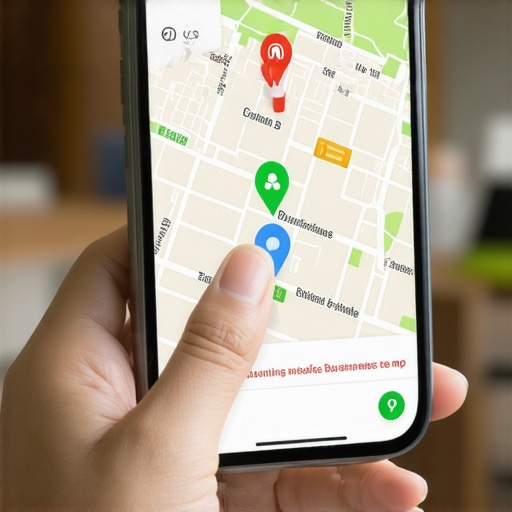
The smell of stale coffee and idling diesel engines defines the life of a logistics manager in the local search world. You do not care about how many people saw your truck driving down the highway; you care about how many people stopped the driver to book a job. Most business owners are obsessed with Map Profile views, but those numbers are often as empty as a dry well. A view is a ghost in the machine that represents a glance, not a lead. We are here to talk about the dispatch signal, the physical ring of a telephone, and the mathematical weight of a localized conversion.
The vanity of the map view metric
Google Business Profile views are often misleading data points that represent impressions rather than intent. A high view count suggests your pin is visible, but tracking map profile phone calls is the only way to measure actual revenue flow. Use a GMB ranking toolkit to filter out noise from real customer actions. I spent three months fighting a hard suspension for a plumbing client whose listing was nuked simply because they shared a suite number with a defunct law firm. Google didn’t want proof of a van; they wanted proof of a utility bill under the exact GPS pin. This battle taught me that the algorithm does not care about your feelings or your view count; it cares about the verification of your physical existence in a specific coordinate. When we finally got the listing back, the views were lower than before, but the phone calls doubled because we stopped chasing general impressions and started using data points to get more real calls from your profile. The disconnect between seeing a listing and calling a listing is where most local SEO strategies fail. You must understand that a view can be triggered by a bot, a competitor, or a user looking for directions to the shop next door. None of those interactions pay the bills. You need the best toolkit to improve local search rankings that prioritizes call-to-action triggers over simple visibility metrics.
The three month battle for a plumbing listing
A hard suspension can destroy a local business overnight by removing the primary proximity beacon from the map. Recovering from this requires a forensic approach to business documentation and GPS coordinate validation. The process involves identifying technical SEO fixes for locations that refuse to appear in search results despite being verified. During that reinstatement war, I realized that Google’s trust is a fragile commodity. The system saw two businesses at one address and chose to delete both rather than risk showing a duplicate. This is why the real cost of keeping a duplicate profile on Google Maps is more than just a ranking drop; it is a total loss of market access. We had to submit time-stamped photos of the plumbing tools, the van with the permanent wrap, and the interior of the office showing the suite number. The logistics of proof are exhausting. If you are struggling with a similar situation, you need technical SEO fixes for locations that refuse to appear in search. It is not about keywords; it is about the physics of the physical space. The algorithm treats your address like a dispatch center. If the coordinates are fuzzy, the flow of leads stops. We even found that how a single mismatched phone number can sink your local seo efforts was at the heart of the trust score collapse. The phone number on the side of the van matched the profile, but an old Yellow Pages listing had a tracking number that created a conflict. Google’s bots flagged the mismatch as a sign of a lead-gen scam, leading to the suspension.
“Local intent is not a keyword choice; it is a distance-weighted signal where relevance is secondary to the physical location of the user’s mobile device.” – Map Search Fundamental
The physics of the three mile proximity radius
Proximity remains the strongest ranking signal in the Google Maps ecosystem. The physical distance between the searcher and the business centroid determines which results populate the 3-pack. A specialized google maps ranking toolkit for local businesses helps identify the exact radius where your visibility starts to fade. If your shop is in the center of town, you likely dominate a two-mile circle. Move three miles out, and your listing vanishes. This is the proximity filter in action. You can try to fight this by how to use a ranking toolkit to target specific local neighborhoods, but you cannot ignore the math of the GPS ping. Many agencies will promise to expand your reach across the entire county, but they are often selling air. The real strategy is to dominate your immediate three-mile radius so thoroughly that Google has no choice but to show you first. This involves cleaning up unstructured citations without a monthly subscription to ensure your NAP data is ironclad. If you change your business model or address, you might notice why your new business model is tanking your old map rank. The algorithm has a memory. It expects a certain type of interaction at a certain coordinate. When you shift the variables, the trust score resets. You need a gmb audit and ranking toolkit to measure these shifts in real-time. Do not rely on automated scans that give you a green checkmark for simply existing. You need a forensic look at how the neighborhood perceives your presence.
The toolkit for real conversion results
The best software to rank in google maps 3 pack focuses on behavioral signals like call volume and direction requests. These tools provide map grid data that shows exactly where your business is gaining or losing territory. Successful agencies use gmb ranking tools for agencies to manage multi-location profiles with surgical precision. When you look at the a simple toolkit for small business map ranking, look for features that track interactions. A view is just a pixel loading on a screen. A call is a customer signaling intent. If you have been hit by a penalty, you might need seo services to recover gmb visibility after category change. Categorization is one of the most sensitive levers in the local algorithm. Pick the wrong primary category, and you are competing with the wrong businesses in the wrong radius. We often see how to identify and fix the thin content that triggers google penalties when owners try to keyword-stuff their service descriptions. The algorithm sees right through it. Instead, focus on building a profile that answers the user’s question before they even ask it. This is why why generic review responses are killing your map profile authority. If you respond to every five-star review with a canned Thank You, you are missing a chance to feed the algorithm specific, localized entities. Use your responses to mention specific neighborhoods and services to build geographic relevance. This is the the review management strategy that builds real trust without using bots.
Local Authority Reading List
- Map Profile Framework Explained
- Streamline Your Local Listing Framework
- Mastering the Ranking Framework 2025
- Unveiling the GBP Structure
- GMB Strategy 2025 Results
The interaction secret for booked appointments
Conversion on maps is driven by the interaction secret that turns map clicks into booked appointments. This involves optimizing the profile for mobile speed and ensuring the primary call button is the most prominent feature. A gmb ranking toolkit helps businesses track these micro-conversions to refine their local presence. People on mobile devices are impatient. They want a solution, and they want it now. If your profile is cluttered with low-quality photos or conflicting information, they will move to the next pin. This is where the interaction secret that turns map clicks into booked appointments becomes your most valuable asset. You must ensure your NAP data is identical across all platforms. We have seen how to sync your nap data without paying monthly for automated tools by using a manual audit process. It takes longer, but the precision is much higher than what most software provides. If you find your business information keeps changing, you need to know why your business profile keeps reverting to old incorrect info. Usually, it is a third-party aggregator with bad data that Google trusts more than your own manual edits. You have to find that source and kill the bad data at the root. This is the only way to maintain a clean record for the long term. You can also use seo services to fix incorrect business information online to expedite this process.
The authority of niche directory signals
Niche directory links move the map pin faster than generic citations because they carry a high topical authority score. A localized backlink profile that Google trusts is built through community sponsorships and industry-specific listings. Avoid buying bad links that can trigger a local map penalty. Most SEOs think a link is a link. They are wrong. A link from a local Little League team or a neighborhood blog is worth ten links from a generic directory. This is how local sponsorships create a stronger proximity signal than guest posts. It tells the algorithm that you are a physical part of the community fabric. When you build these signals, you create a moat around your territory. If a competitor tries to attack your ranking, your deep local roots will keep your pin in place. This is part of reclaiming your neighborhood territory after a competitor attack. Do not let spammy listings push you out. You can how to report and remove competitor spam that is stealing your leads by using the redressal form. It is a slow process, but it is the only way to clean up the neighborhood and ensure the best businesses rise to the top. If you have made mistakes in the past, look into the proven method for cleaning up toxic legacy local seo signals. You cannot build a new house on a rotten foundation.
The forensic trace of service area polygons
Service area businesses must define their territory using forensic traces of service area polygons to avoid being flagged for spam. Incorrectly defined areas can lead to hard suspensions that are difficult to overturn. A multi-location toolkit helps scale growth without triggering automated filters. If you do not have a physical storefront where customers are greeted, you are a Service Area Business. Google is extremely suspicious of these profiles because they are the most common source of map spam. You must define your area by cities, zip codes, or a specific radius, but never both. Overlapping your service areas can look like a lead-gen network. If you are hit by a filter, you need to know how we restored visibility for a profile hit by a spam filter. It usually involves stripping the profile down to its core verified facts and rebuilding the trust score from scratch. Many businesses struggle because why your service area pages never turn into real map clicks. The disconnect is usually a lack of local relevance on the website itself. Your city pages must be as unique as the neighborhoods they serve. Use why duplicate content on city pages is killing your local reach as a warning. If every city page is a carbon copy of the last, Google will ignore them. You need to provide real value to the user at every coordinate of your service area. This is the only way to turn a view into a phone call and a phone call into a customer.