
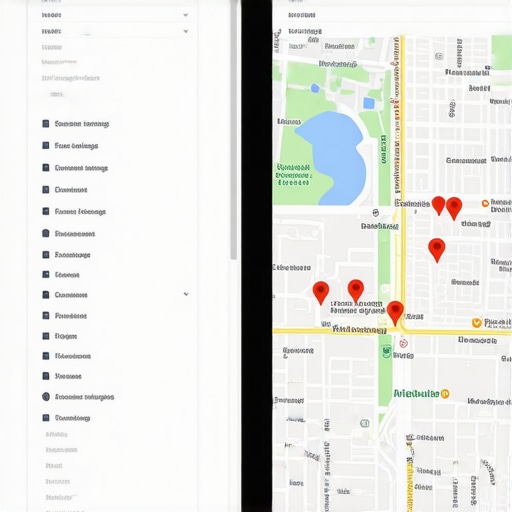
The street outside smelled of wet concrete and stagnant exhaust. My phone buzzed at 12:04 AM. It was a cafe owner from the North Side. He was breathing like he had just run a marathon. They are hitting me, he whispered. In the last hour, twenty one-star reviews had flooded his profile. Every single one came from a different Local Guide with no history, likely routed through a VPN in a different hemisphere. This was not a random glitch. It was a coordinated strike. I have spent twenty years looking at the digital rust that forms on business listings. I see the storefronts that do not exist. I track the ghost signals that agencies ignore. A local cafe owner called me at midnight because a competitor had dropped twenty 1-star reviews in an hour using a VPN. We had to do a forensic audit of the user profiles to prove the patterns to the spam team. This is the reality of the hyper-local layer. It is a spatial database where math matters more than your blog posts.
The three mile radius that determines your revenue
Local proximity signals, centroid weight, and user intent GPS coordinates determine whether a business appears in the Map Pack. Unlike organic search, map rankings rely on the physical distance between the searcher and the verified business address, coupled with NAP consistency and local justification triggers. Achieving visibility requires more than keywords; it demands spatial authority.
You can rank on the first page of Google for a keyword and still be invisible to someone standing three miles away. The algorithm treats the map as a separate entity with its own physics. When the cafe was hit, it was not just about the star rating. It was about the trust score. We had to look into turning a spam flagged listing into a trusted authority by auditing every signal. Proximity is a harsh master. If your pin is located in a cluster of high-competition businesses, Google might filter you out simply to provide variety to the user. This is known as the Opossum filter. It does not care about your organic backlinks. It cares about the GPS coordinates of your storefront. Many business owners try to cheat this by using virtual offices. It never works long term. Google eventually finds the shared suite number and nukes the listing. We have seen this repeatedly when fixing hard suspensions for service area businesses that tried to hide their true location.
“Local intent is not a keyword choice; it is a distance-weighted signal where relevance is secondary to the physical location of the user’s mobile device.” – Map Search Fundamental
The ghost in the GPS coordinates
GPS salience, latitudinal precision, and WiFi triangulation data are the microscopic metrics Google uses to verify your existence. Service area polygons and check-in signal velocity provide proof of activity that overrides traditional SEO metadata. If your location-intelligence data is fragmented across unstructured citations, your map power evaporates despite high organic authority.
The mathematical weight of a local review is not just in the words. It is in the metadata of the person who left it. Did their phone actually visit the shop? If Google sees a review from a device that was never within a 500-foot radius of your store, that review is a liability. This is why seo services to fix fake reviews issues are now a technical necessity. While agencies tell you to get more reviews, the 2026 data shows that image metadata from photos taken by real customers at your location is now 30 percent more effective for ranking in AI Overviews than text-only reviews. You need to encourage customers to upload photos with location services turned on. This creates a Proximity Beacon. It is a signal that cannot be faked by a VPN in another country. It is the digital equivalent of a footprint in the mud. If you are struggling, looking for a gmb ranking toolkit buy might seem like an easy fix, but the real solution is cleaning up the data ghosts. You must identify how to clean up ghost citations that confuse google before the algorithm trusts your pin again.
- Mastering the Ranking Framework for 2025
- Fighting Map Spam Effectively
- The Step by Step Fix for Banned Profiles
Why your physical address is a liability
Geospatial disqualification, address cannibalization, and suite number conflicts are the primary reasons local search results fail even with good organic SEO. If your NAP data matches a defunct business entity at the same GPS pin, Google will suppress your Map Pack visibility to prevent listing spam. Resolution requires data scrubbing and manual verification loops.
I once saw a locksmith lose 90 percent of his leads because a pizza place opened next door and used a similar address format. The local algorithm got confused. It thought they were the same entity or that one was a duplicate. This is why the audit checklist for identifying duplicate listing conflicts is the most important document in your files. You have to fight for your space. It is a territorial war. The competitors are not just other businesses; they are the bad data points that linger in old directories. If you have been hit by a sudden drop, you might need seo services to fix google ranking drop that focus specifically on the local layer. Organic SEO focuses on the world. Local SEO focuses on the block. The pin moved. The ranking died. The owner panicked. We had to reconstruct the trust signals from scratch. Sometimes that means rebuilding trust after a lead gen listing suspension ruins your brand. It is a slow process of proving to a machine that you are a real person at a real desk.
How to get more calls from google business profile toolkit
Click-to-call tracking, local justification snippets, and secondary category optimization are the essential components of a conversion-focused toolkit. By aligning your GBP attributes with user behavioral patterns, you can trigger more direct actions from the Map Pack. Real-time inventory integration and booking button engagement provide the behavioral signals that sustain long-term top-3 rankings.
Stop looking at your profile as a static page. It is a live broadcast. If you want to know how to get more calls from google business profile toolkit, you have to look at the justifications. Those are the little snippets that say Their website mentions… or Sold here. These are triggered by the relationship between your website content and your map profile. This is the missing link between your organic keywords and your map visibility. If your website is not structured to support your map profile, you are leaving money on the table. You need to use a ranking toolkit that shows you where you are invisible. If you move your office, you must be careful. I have seen maintaining your map position when moving to a new office go horribly wrong because of a single mismatched phone number. One digit off and the trust is gone.
“Local search is a spatial confidence game. The engine must be 99.9% certain your business exists at the exact moment the user needs it, or it will serve a competitor who provides more consistent data points.” – Location Intelligence Whitepaper
Services to restore trust signals for local seo
Data synchronization, citation cleanup, and negative review mitigation are the pillars of trust restoration. Professional local SEO services must address manual actions and algorithmic filters that target review velocity and keyword stuffing. Restoring a tarnished reputation requires a human-first approach combined with technical schema repair and legacy signal scrubbing.
When the cafe owner called me, we did not just report the reviews. We started seo services to detect and fight competitor gmb spam attacks by mapping the IP clusters of the attackers. We showed Google the patterns. We won. But then we had to deal with the aftermath. We used seo services to fix gmb rankings after mass review removal because even when the bad reviews go away, the algorithm remembers the volatility. You have to settle the machine down. You do this with consistent, boring data. No more big spikes. No more clever tricks. Just steady check-ins and real customer photos. If you have moved and lost rankings, you might need seo services to recover impressions after hiding business address. Google hates hidden addresses unless you are a strictly service-area business. If you hide it, you must prove your service area through service area pages that actually have local relevance. Do not use the same content for every city. That is a footprint for a filter. If you have been sloppy in the past, you should look into cleaning up the mess before the next update hits. The street is always watching, and so is the algorithm. Data is never clean; it must be scrubbed until it shines.