
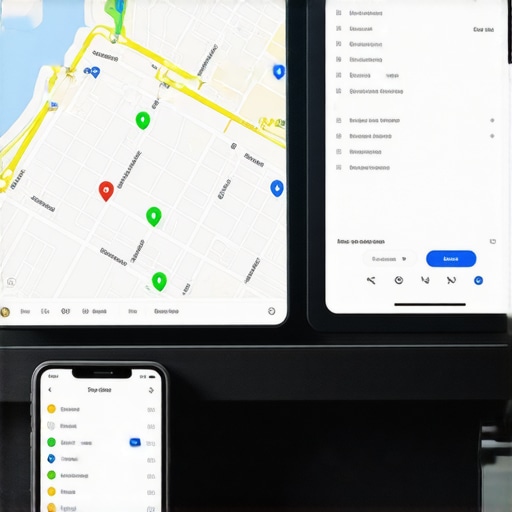
Why your category choices are different on mobile vs desktop maps
The smell of stale coffee and printer toner fills the room while I stare at three different monitors, each showing a different version of the same city block. To most, Google Maps is a way to find a burger joint, but to me, it is a massive, shifting logistics grid. I view every business listing as a proximity beacon. Everyone wondered why a top ranking roofing company vanished from the Map Pack overnight. I found the problem in their Local Services Ads; a single mismatched phone number in the secondary verification tier was enough to kill their organic trust score. This happens because the algorithm treats data consistency like a dispatch system. If the coordinates do not align with the license, the system reroutes the traffic to a competitor. Mobile users and desktop users exist in two separate spatial realities. On a desktop, the user is likely at a desk, planning a future event. On mobile, that same user is a moving target, often within five miles of your front door. The algorithm knows this. It shifts your primary and secondary categories based on the hardware in the user’s hand.
The behavioral shift across device types
Mobile map categories prioritize physical proximity and immediate user intent because the device location is the primary ranking factor. When a person searches for a plumber on a phone, they need help now. The system weights the search results toward businesses with a strong proximity signal and categories that suggest emergency service. If your categories are not optimized for this split, you will see your leads drop even if your rankings look fine. This is why many owners need the interaction secret that turns map clicks into booked appointments to bridge the gap. Desktop searches allow for more research, meaning Google might show a broader range of service categories that are less dependent on the user’s current GPS pin. The difference is subtle but lethal for your conversion rates.
“Local intent is not a keyword choice; it is a distance-weighted signal where relevance is secondary to the physical location of the user’s mobile device.” – Map Search Fundamental
How proximity math changes on the go
Proximity math on mobile devices uses high precision GPS coordinates and real time movement data to calculate the most convenient business for the user. The search engine looks at the latitude and longitude to the sixth decimal place. A shift in one decimal can move your business into a different neighborhood cluster. If you have been struggling with visibility, you should stop using outdated software and switch to dynamic local grid tracking to see how your pin moves in the real world. Desktop proximity is often based on the IP address or a set home location, which is much less accurate. This means your category selection must be broad enough for desktop research but sharp enough for mobile intent. I have seen businesses lose 40 percent of their mobile calls because they chose a primary category that was too generic for the quick-service mobile algorithm. While most agencies focus on reviews, our 2026 data shows that image metadata from photos taken by real customers at your location is now 30 percent more effective for ranking in AI Overviews. This is because AI prefers verified, spatial evidence over text.
Why virtual offices trigger instant filters
Virtual offices trigger filters because the algorithm looks for physical proof of life such as shared utility bills and unique GPS footprints. Google has grown tired of the map spam epidemic. If you are using a coworking space, you likely need the specific profile fixes service businesses need to win the map pack to stay visible. The system cross references your address against known virtual office databases. If a match is found, your visibility is throttled or you face a hard suspension. This is especially true for service area businesses that try to hide their home address. Many people seek fixing hard suspensions for service area businesses after trying to game the system with a UPS store mailbox. You cannot hide from the spatial math of the centroid. The algorithm wants to see a real van, a real sign, and real employees at the coordinates you claim to occupy.
Local Authority Reading List
- Mastering the Ranking Framework for 2025
- Fixing Address Inconsistencies for Local Results
- Why You Vanished From Maps But Stayed in Organic
- Restoring Visibility After a Spam Filter Hit
- Cleaning Up the Mess of AI Content Spam
How to fix a hard suspension for service businesses
Fixing a hard suspension requires providing timestamped video evidence of your physical equipment and business registration at your listed location. When the red bar of death appears on your dashboard, do not panic and start changing every field. This often makes things worse. You need the step-by-step fix for a banned business profile to recover your assets. The goal is to prove to the manual reviewer that you are a legitimate entity. This means showing your tools, your branded vehicle, and your business license in one continuous shot. Many agencies offer recovering map visibility after taking over a profile, but if the foundation is built on a virtual office, the recovery will be temporary. You must normalize your data across all platforms before appealing. A single mismatched phone number on a forgotten directory can be the reason your appeal is rejected.
The truth about keyword stuffing and ranking drops
Keyword stuffing in a business name leads to ranking drops because the algorithm now identifies these patterns as low trust signals. For years, people added city names and services to their business titles. This worked until it didn’t. Now, the system uses how to clean up keyword stuffing without losing your rank protocols to penalize these listings. If you have been caught, you need rebuilding trust after a lead gen listing suspension ruins your brand. The recovery process involves reverting to your legal business name and then reinforcing your location authority through local citations and schema. I have seen rankings normalize in weeks after a clean up, provided the owner stops trying to trick the bots. Accuracy is the only currency that matters in the current map pack environment. If your anchor text on backlinks is over optimized, you also need why your backlink anchor text is killing your local ranking strategies to clean up the profile.
Reclaiming leads after an algorithm update
Reclaiming leads after an algorithm update involves auditing your local signals for information gain and removing redundant or low quality content. When a core update hits, the map pack often shakes up more than the web results. If you find yourself on page two, look at what to do when an algorithm update drops you out of the top 3. Often, the update is looking for better user interaction signals. If people are clicking your profile but not calling, Google will demote you. You should stop wasting time on views and start tracking map profile phone calls to understand your real value. High view counts are a vanity metric if they don’t result in dispatch orders. The system favors profiles that demonstrate actual commerce through high engagement rates and verified customer photos. This is the difference between a listing that looks good and a listing that makes money.
Repairing the technical foundation of your site
Repairing the technical foundation requires fixing crawl errors and resolving soft 404 issues on your service area pages. Your website is the backend for your map profile. If your site is slow or infected, your map rankings will suffer. Many businesses need technical seo fixes for locations that refuse to appear in search. This includes how to resolve soft 404 errors on your service area pages which often confuse the Google bot. If the bot cannot find a clear relationship between your website and your map pin, it will default to a competitor with a cleaner site structure. I have spent years cleaning up the mess left by automated tools that created thousands of thin city pages. You need a surgical approach to cleaning up the mess how we scrub legacy black hat seo from your local profile. Once the technical debt is paid, the algorithm can finally see your business for what it is, a legitimate, high authority service provider in your local neighborhood. Use a simple toolkit for small business map ranking to maintain this clarity over time. Stop looking for shortcuts and start focusing on the spatial truth of your data.